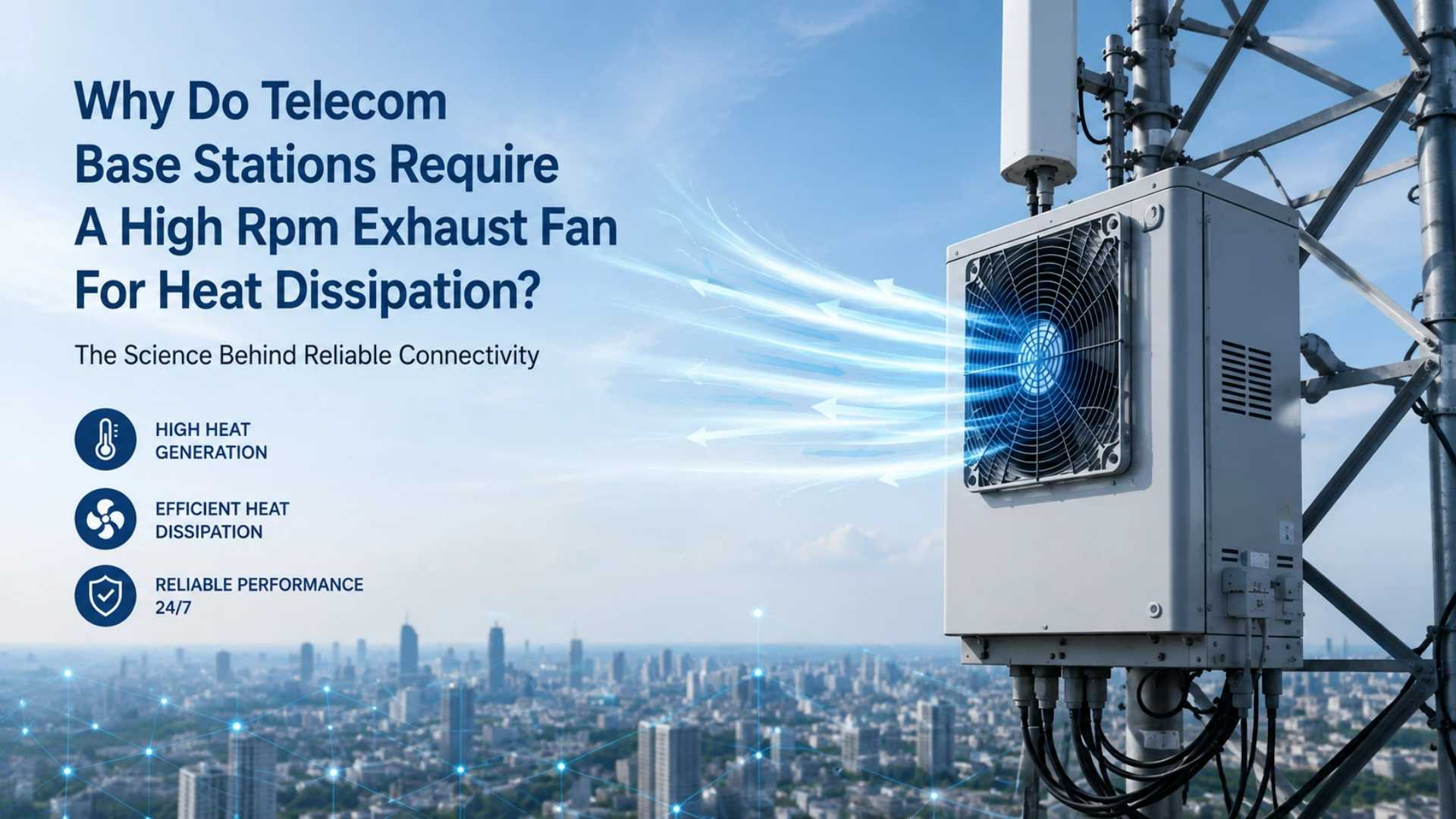
통신 기지국에 방열을 위한 고 RPM 배기 팬이 필요한 이유는 무엇입니까?
August 26 , 2026통신 기지국은 현대 무선 통신 네트워크의 기반입니다. 4G 매크로 기지국과 5G 스몰 셀부터 옥외 통신 캐비닛, 무선 장치, 기저대역 장비 및 에지 통신 시스템에 이르기까지 이러한 설비는 까다로운 환경 조건에서도 지속적으로 작동해야 합니다. 일반 전자 제품과는 달리 통신 기지국은 유지보수가 어렵고 주변 온도가 급격하게 변하는 장소에 설치되어 24시간 내내 가동되어야 합니다.
통신 기술의 속도가 빨라지고 장비가 더욱 소형화됨에 따라 열 관리는 기지국 설계에서 점점 더 중요한 요소가 되고 있습니다. 처리 능력 향상, 전송 용량 증가, 장비 밀도 증가는 통신 캐비닛 내부의 열 발생량을 크게 증가시킬 수 있습니다. 이러한 열을 효율적으로 제거하지 못하면 내부 온도가 상승하여 열 스로틀링, 성능 저하, 부품 노화, 경보 발생 또는 예기치 않은 시스템 중단으로 이어질 수 있습니다.
이것이 바로 통신 기지국 냉각 시스템에 고RPM 배기 팬이 자주 고려되는 주요 이유 중 하나입니다. 고속 팬은 협소한 설치 공간에서도 강력한 풍량을 생성하여 열 제거 효율을 높이고 주요 전자 부품 주변의 온도를 안정적으로 유지하는 데 도움을 줄 수 있습니다. 그러나 팬의 적합성은 RPM만으로 결정되는 것이 아닙니다. 풍량, 정압, 팬 형상, 작동 전압, 신뢰성, 환경 보호 및 제어 기능 등을 모두 종합적으로 고려해야 합니다.
따라서 통신 장비 제조업체와 시스템 통합업체는 기지국용 냉각 팬을 선택할 때 팬 속도와 열 성능 간의 관계를 이해하는 것이 필수적입니다.
통신 기지국은 왜 그렇게 많은 열을 발생시킬까요?
통신 기지국 내부의 거의 모든 전자 장치는 전력을 소비하며, 그 전력의 상당 부분이 결국 열로 변환됩니다. 무선 주파수 장비, 기저대역 처리 장치, 전원 공급 장치, 광 모듈, 스위치, 라우터 및 기타 전자 부품들이 모두 전체 열 부하에 영향을 미칩니다.
5G 인프라에서는 상황이 더욱 어려워지는데, 최신 통신 장비가 더 많은 양의 데이터를 더 낮은 지연 시간으로 처리하도록 설계되었기 때문입니다. 처리 성능이 향상되면 전력 소비가 증가할 수 있고, 소형화된 장비 패키징은 제한된 공간 내에서 열 밀도를 높일 수 있습니다.
문제는 단순히 총 열량만이 아닙니다. 열 분포 또한 중요합니다. 캐비닛의 평균 온도는 적절할 수 있지만, 개별 부품은 국부적으로 훨씬 높은 온도를 경험할 수 있습니다. 이러한 국부적인 고온 지점은 전력 반도체, 프로세서, 통신 모듈 및 기타 온도에 민감한 부품에 특히 위험할 수 있습니다.
통신 기지국 냉각에 대한 연구는 공기 흐름의 원활한 분배가 중요하다는 점을 강조해 왔습니다. 공기 흐름이 제대로 분배되지 않으면 특정 부위에 과열 지점이 발생하여 통신 장비의 온도가 상승할 수 있기 때문입니다. 한 현장 연구에서는 공기 분배를 개선하는 것이 장비 온도를 유지하고 냉각 에너지 소비를 줄이는 데 중요한 요소로 확인되었습니다.
이러한 이유로 제대로 설계된 배기 팬은 단순히 공기를 이동시키는 데 그쳐서는 안 됩니다. 캐비닛 내부로 예측 가능한 공기 흐름 경로를 구축하는 데 도움을 주어야 합니다.
고속 회전 배기 팬은 실제로 어떤 역할을 할까요?
배기 팬의 주된 목적은 밀폐된 공간에서 뜨거운 공기를 제거하고 지정된 개구부를 통해 차가운 공기가 유입되도록 하는 것입니다. 이는 지속적인 강제 대류를 발생시켜 전자 부품 주변에 열이 축적되는 것을 방지합니다.
RPM은 분당 회전수를 의미합니다. 일반적으로 팬 속도를 높이면 공기 흐름과 압력이 증가하지만, 정확한 관계는 팬 설계에 따라 다릅니다. RPM이 높은 팬은 좁은 공간을 통해 더 많은 양의 공기를 이동시킬 수 있으며, 특히 필터, 그릴, 방열판, 덕트 또는 기타 공기 흐름을 제한하는 부품이 있는 경우에 유용합니다.
예를 들어, 저속 팬은 개방된 공간에서 작동할 때는 충분한 공기 흐름을 제공할 수 있지만, 보호 그릴이나 필터 뒤에 설치되면 성능이 크게 저하될 수 있습니다. 고속 설계는 이러한 실제 작동 조건에서 유용한 공기 흐름을 유지하는 데 필요한 추가적인 압력 용량을 제공할 수 있습니다.
이러한 이유로 엔지니어는 단순히 자유 공기 흐름량 수치만을 기준으로 팬을 선택해서는 안 됩니다. 정압이 0일 때 높은 공기 흐름량을 제공하는 팬이라도 실제 통신 캐비닛 내부에 설치했을 때 충분한 냉각 성능을 제공하지 못할 수 있습니다.
공기 흐름과 저항 사이의 관계는 선풍기 선택에서 가장 중요한 개념 중 하나입니다.
통신 장비 냉각에 정압이 중요한 이유는 무엇일까요?
정압은 팬이 공기 흐름 경로 내의 저항을 극복하는 능력을 나타냅니다. 통신 캐비닛에서 공기 흐름은 완전히 개방된 환경을 통과하는 경우가 드뭅니다.
공기는 캐비닛을 빠져나가기 전에 흡입구, 먼지 필터, 방열판, 전자 모듈, 보호망, 좁은 통로 및 배기구 등을 통과해야 할 수 있습니다. 이러한 모든 구성 요소는 압력 손실을 발생시킬 수 있습니다.
압력 저항이 증가하면 팬의 실제 풍량은 감소합니다. 따라서 자유 공기 풍량이 높은 팬이라도 실제 밀폐된 공간에서 충분한 압력을 생성하지 못하면 성능이 저하될 수 있습니다.
이곳은 바로고RPM 배기 팬회전 속도가 높을수록 시스템 저항이 커지더라도 팬이 유용한 공기 흐름을 유지하는 데 도움이 될 수 있습니다. 하지만 엔지니어는 최대 RPM이나 최대 공기 흐름 값에만 의존하기보다는 팬의 성능 곡선을 항상 평가해야 합니다.
통신 설비 냉각 설계의 핵심은 전체 시스템의 공기 흐름 요구량을 파악하는 것입니다. 설계자는 열 부하를 예측하고, 허용 가능한 온도 상승폭을 결정하고, 공기 흐름 저항을 확인한 후, 필요한 시스템 작동 지점에서 효율적으로 작동할 수 있는 팬을 선택해야 합니다.
소형 통신 캐비닛에서 고속 회전(RPM)이 유용한 이유는 무엇일까요?
공간 제약은 현대 통신 장비의 주요 제약 조건 중 하나입니다. 통신 장비는 점점 작아지는 반면 처리 능력은 지속적으로 향상되고 있습니다. 이는 엔지니어들이 더 작은 물리적 공간에서 더 많은 열을 제거해야 한다는 것을 의미합니다.
대형 팬은 낮은 회전 속도에서도 더 많은 공기를 이동시킬 수 있지만, 설치 공간이 부족할 수 있습니다. 설치 공간이 제한적일 경우, 소형 고RPM 팬이 실용적인 대안이 될 수 있습니다.
이는 특히 소형 통신 캐비닛, 무선 장치, 네트워크 장비 및 소형 옥외용 외함에 적합합니다. 이러한 용도에서 팬 속도를 높이면 냉각 시스템의 물리적 크기를 크게 늘리지 않고도 필요한 열 성능을 달성할 수 있습니다.
하지만 높은 RPM을 만능 해결책으로 여겨서는 안 됩니다. 회전 속도가 높아지면 소음, 진동, 베어링 스트레스 및 전력 소비가 증가할 수 있습니다. 올바른 목표는 가능한 한 가장 높은 RPM을 달성하는 것이 아니라, 실질적인 에너지 소비와 소음 발생을 최소화하면서 필요한 공기 흐름과 압력을 확보하는 것입니다.
통신 장비에서 냉각 팬 DC의 역할
에이냉각 팬 DC통신 장비 설계에 있어 직류(DC) 냉각 팬은 매력적인 선택지가 될 수 있는데, 이는 많은 통신 시스템이 이미 DC 전원 아키텍처를 사용하고 있기 때문입니다. 통신 인프라는 일반적으로 전용 DC 전원 시스템으로 운영되므로 DC 냉각 팬을 직접 통합하는 것이 편리합니다.
DC 팬은 속도 제어, 모니터링 및 시스템 수준의 열 관리도 지원할 수 있습니다. 설계에 따라 제어 신호를 사용하여 팬 속도를 모니터링하거나 비정상 작동 조건을 감지할 수 있습니다.
원격 통신 설비의 경우, 이러한 기능은 매우 유용할 수 있습니다. 기지국은 시골 지역, 옥상, 고속도로 옆 또는 빈번한 수동 점검이 비현실적인 다른 장소에 설치될 수 있습니다. 냉각 팬이 예고 없이 고장 나면 온도가 상승하여 결국 통신 장비에 영향을 미칠 수 있습니다.
따라서 최신 통신 장비 냉각 시스템은 속도 피드백, 오류 경보 또는 기타 모니터링 기능을 제공할 수 있는 팬을 활용하는 경우가 많습니다.
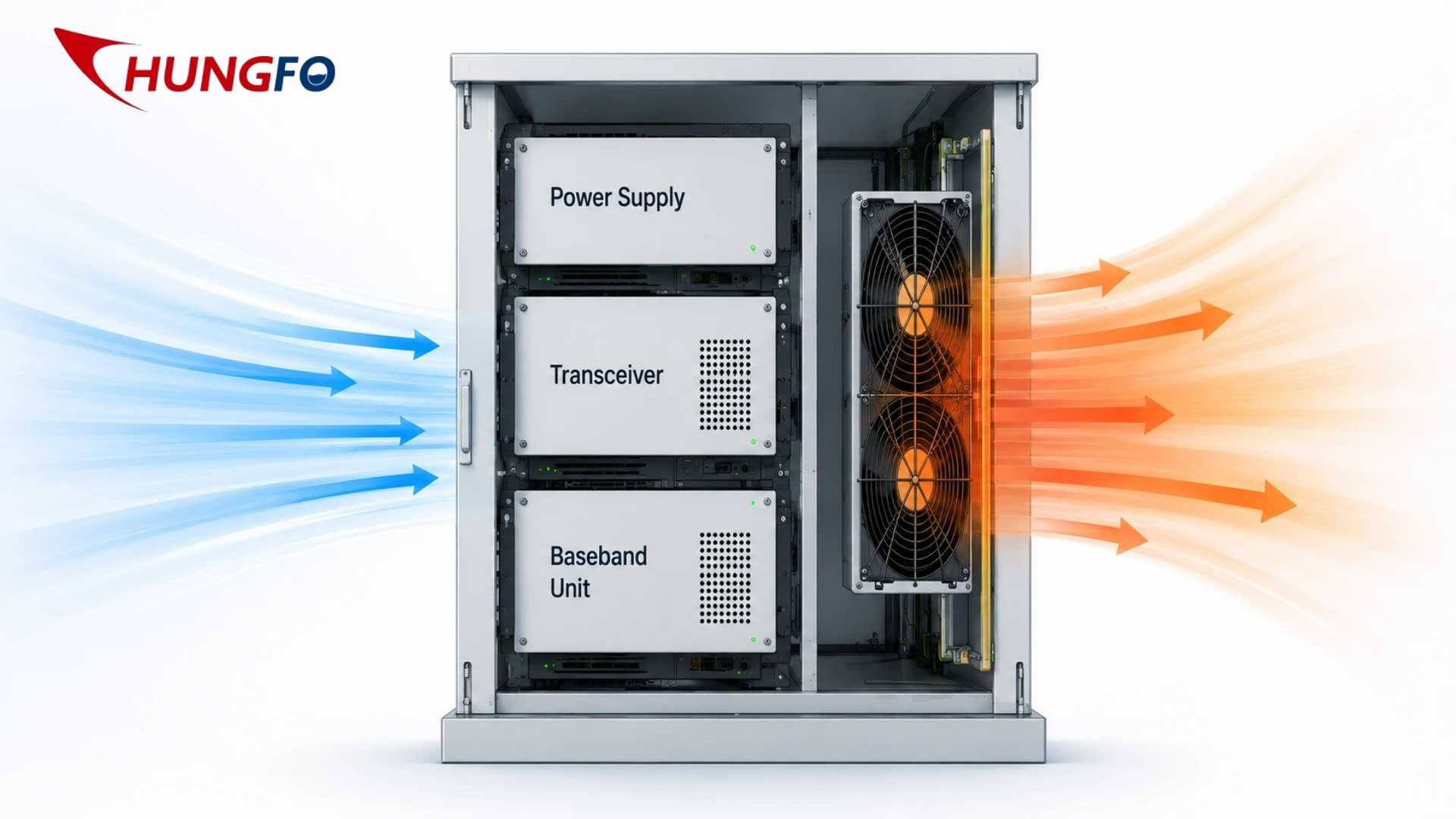
DC 브러시리스 축류 팬이 널리 사용되는 이유는 무엇일까요?
DC 브러시리스 축류 팬이 제품들은 컴팩트한 크기, 직접적인 공기 흐름, 효율적인 전자식 정류 방식을 결합하여 다양한 통신 장비 냉각 용도에 매우 적합합니다.
기존의 브러시 모터와 달리 브러시리스 모터는 정류를 위해 기계식 브러시에 의존하지 않습니다. 따라서 기계적 마모의 주요 원인이 제거되어 장시간 연속 작동이 필요한 응용 분야에 적합합니다.
축류 팬은 팬 축과 평행하게 공기를 이동시킵니다. 따라서 캐비닛이나 환기 채널을 통해 많은 양의 공기를 이동시켜야 할 때 특히 효과적입니다.
통신 장비는 브러시리스 DC 모터의 제어 기능 덕분에 여러 이점을 누릴 수 있습니다. 팬 속도는 온도 또는 장비 부하에 따라 조절할 수 있습니다. 열 요구량이 낮은 기간에는 팬을 저속으로 작동시킬 수 있습니다. 내부 온도가 상승하면 컨트롤러는 팬 속도를 높여 추가적인 냉각 용량을 제공할 수 있습니다.
이러한 접근 방식은 열 안전성을 유지하면서 불필요한 전력 소비와 소음을 줄일 수 있습니다.
높은 RPM이라고 해서 팬이 항상 최대 속도로 작동해야 하는 것은 아닙니다. 잘 설계된 제어 시스템은 필요할 때 고속으로 작동하게 하고, 일반적인 상황에서는 저속으로 작동할 수 있도록 합니다.
통신 캐비닛용 축류 팬 송풍기 선정
축류 팬 블로어라는 용어는 강제 환기 솔루션을 논할 때 종종 포괄적으로 사용되지만, 엔지니어는 제품을 선택할 때 축류 및 원심류 기류 특성을 구분해야 합니다.
축류 팬은 일반적으로 많은 양의 공기가 비교적 직선적인 공기 흐름 경로를 통해 통과해야 할 때 선호됩니다. 원심 송풍기는 시스템에 더 높은 압력이 필요하고 공기 흐름이 덕트 또는 좁은 통로를 통해 방향을 바꿔야 할 때 더 적합할 수 있습니다.
통신 캐비닛의 경우, 적절한 선택은 외함 구조, 내압성 및 냉각 방식에 따라 달라집니다.
캐비닛에 큰 통풍구가 있고 공기 흐름 경로가 비교적 개방적이라면 축류 팬이 효율적인 해결책이 될 수 있습니다. 하지만 공기가 밀집된 열교환기, 좁은 통로 또는 복잡한 덕트 시스템을 통과해야 하는 경우에는 고압 팬이나 송풍기가 더 적합할 수 있습니다.
이러한 구분은 중요합니다. 왜냐하면 잘못된 팬 유형을 선택하면 정격 풍량이 충분해 보이더라도 냉각 성능이 기대에 미치지 못할 수 있기 때문입니다.
높은 회전수와 열 방출 효율
밀폐된 공간에서 열을 제거하는 과정은 열 부하, 공기 흐름 및 온도 상승 사이의 기본적인 관계를 통해 설명할 수 있습니다.
시스템이 일정한 양의 열을 발생시킬 때, 유입되는 공기가 내부 공기보다 충분히 차가우면 일반적으로 밀폐된 공간을 통과하는 공기의 양을 늘리면 유입 공기와 배출 공기 사이의 온도 차이를 줄일 수 있습니다.
즉, 높은 열 부하를 처리하기 위해 추가적인 공기 흐름이 필요할 때 높은 RPM이 유용할 수 있다는 의미입니다.
However, thermal performance depends on more than airflow quantity. The location of the inlet, the position of heat-generating components, the direction of fan rotation, the exhaust location and the internal structure of the cabinet all affect the actual cooling result.
If the fan creates airflow that bypasses the hottest components, the theoretical airflow rating may not translate into effective component cooling.
This is why airflow organization is as important as fan performance.
The Importance Of Airflow Direction
A successful telecom cooling system should establish a clear airflow path.
Cool air should enter from an appropriate location, pass across the heat-generating components and then leave the cabinet through an exhaust path. The airflow should not circulate unnecessarily inside the enclosure.
An exhaust fan mounted at the correct position can create negative pressure inside the cabinet and encourage air to move through the intended path.
For example, if hot air naturally accumulates near the upper part of the cabinet, an exhaust fan installed near the upper outlet can help remove that accumulated heat. At the same time, an intake opening should be positioned to provide cooler air to the equipment.
The exact configuration depends on cabinet geometry and component arrangement.
Why 5G Makes Cooling More Challenging
5G communication equipment introduces additional thermal management challenges because the infrastructure is designed for high data throughput, low latency and dense deployment.
Research has shown that increasing power density and energy consumption in 5G base stations make thermal performance and energy efficiency increasingly important. Hybrid cooling systems and cabinet-level thermal management have therefore become active areas of engineering research.
In practical applications, the cooling system must work continuously while maintaining equipment temperature under changing outdoor conditions.
An outdoor cabinet can experience high solar radiation, high ambient temperature, humidity, rain, dust and salt exposure. These factors place additional demands on the fan.
A fan that performs well in a laboratory may not necessarily provide the same reliability in a coastal outdoor cabinet.
Environmental Requirements For Telecom Exhaust Fans
Outdoor telecom equipment may operate under a wide range of environmental conditions. Temperature, humidity, dust, water, salt spray and vibration can all affect fan performance.
For outdoor applications, designers should therefore consider the appropriate protection structure, corrosion resistance, bearing technology and material selection.
The fan housing and impeller must maintain mechanical integrity under temperature changes. Bearings must be capable of supporting long continuous operation. Electronic components should be designed for the expected voltage and temperature range.
In coastal environments, salt and moisture can accelerate corrosion. In dusty environments, filters may become blocked and increase airflow resistance. This can cause the fan operating point to move toward a lower airflow condition.
A reliable telecom cooling system should therefore consider the fan and the entire ventilation system as one integrated design.
Fan Reliability Is As Important As Fan Speed
Telecom infrastructure is often expected to operate continuously for years. A fan that delivers excellent airflow but fails prematurely is not a reliable cooling solution.
Bearing selection is one important factor. Ball bearings are commonly considered for applications requiring long service life and wide operating conditions, while sleeve bearing designs may be suitable for certain cost-sensitive or controlled environments.
Motor quality, winding design, electronic commutation, impeller balance and manufacturing consistency also affect service life.
Dynamic balancing is particularly important for high RPM fans. As rotational speed increases, imbalance can create greater vibration and mechanical stress. A properly balanced impeller helps reduce vibration and improves overall operating stability.
This is why high RPM fan manufacturing requires careful control of mechanical tolerances and production quality.
Noise And High RPM
One disadvantage of high RPM operation is increased noise.
Telecom equipment may be installed near offices, residential areas, transportation infrastructure or other locations where acoustic performance matters. A fan running continuously at maximum speed can generate unnecessary noise if the thermal load is actually low.
The solution is not necessarily to avoid high RPM fans. Instead, the system can use intelligent speed control.
Temperature sensors can monitor the internal environment and adjust fan speed according to thermal demand. When the cabinet is cool, the fan can operate at a lower speed. When temperature increases, the controller can increase RPM.
This provides a balance between cooling capacity, energy consumption and noise.
Energy Efficiency In Base Station Cooling
Cooling can represent a significant part of the overall energy consumption of communication infrastructure. Therefore, thermal management must balance reliability with energy efficiency.
A fan that operates at unnecessarily high speed consumes more energy than required. On the other hand, reducing fan speed too much can increase internal temperature and compromise equipment reliability.
Recent research into 5G base station cooling has focused on optimizing cooling operation and fan speed to reduce energy consumption while maintaining thermal requirements.
This supports an important engineering principle: the best fan is not necessarily the fan with the highest RPM. The best fan is the fan that provides sufficient cooling performance under the real operating conditions while maintaining acceptable energy consumption and reliability.
Fan Redundancy For Critical Telecom Equipment
Because communication networks are critical infrastructure, redundancy can be an important part of cooling system design.
If one cooling fan fails, another fan may continue to provide sufficient airflow until maintenance can be performed. In higher-reliability systems, multiple fans can operate together so that the system retains cooling capacity even after one fan experiences a fault.
This is commonly described through configurations such as N plus 1 redundancy.
Fan monitoring can further improve reliability. Speed feedback can help detect a stalled or degraded fan, while alarm signals can notify the control system when abnormal conditions occur.
For remote base stations, this type of monitoring can reduce maintenance response time and help prevent thermal failures.
How To Select A High RPM Exhaust Fan For A Base Station
The selection process should begin with the thermal load rather than the fan itself.
First, determine the amount of heat generated by the equipment. Next, identify the maximum allowable internal temperature and the expected ambient temperature. Then calculate the required airflow and evaluate the pressure losses created by filters, grilles, heat sinks and enclosure structures.
After that, compare fan performance curves.
Engineers should evaluate airflow at the actual static pressure rather than relying on the free-air airflow value. Rated voltage, operating voltage range, RPM, power consumption, noise, bearing type, operating temperature and expected service life should also be considered.
For outdoor telecom cabinets, environmental protection and corrosion resistance should be included in the selection criteria.
The fan should also be evaluated for control and monitoring functions. Depending on the system, PWM control, FG speed feedback, RD alarm output or other customized signals may be required.
Why Manufacturing Quality Matters
The performance of a telecom cooling fan depends heavily on manufacturing consistency.
High speed rotation requires accurate impeller geometry, balanced components, reliable bearings and stable motor performance. Small manufacturing deviations can influence vibration, noise, airflow and service life.
A professional fan manufacturer should therefore have appropriate testing capabilities for airflow, pressure, noise, vibration, temperature and reliability.
Quality control should extend from motor components and electronic control boards to impeller molding, assembly and final testing.
For OEM and ODM telecom projects, customized voltage, connector, cable length, alarm signal and mounting dimensions may also be required.
Chungfo provides cooling fan solutions for different electronic and industrial applications, with capabilities covering product design, injection molding, SMT production and fan assembly. The company can support customers who need customized cooling fan solutions for equipment requiring stable airflow and long-term operation.
The Future Of Telecom Base Station Cooling
The future of telecom cooling will increasingly focus on intelligent control, energy efficiency and system integration.
Instead of operating cooling fans continuously at a fixed speed, modern systems can adjust airflow according to equipment temperature, workload and environmental conditions.
Sensor-based control can reduce energy consumption during low-load periods while providing rapid cooling when thermal demand increases.
At the same time, the increasing deployment of edge computing, high-density communication equipment and distributed 5G infrastructure will continue to create demand for compact and reliable cooling technologies.
Fan technology will therefore remain an important part of telecom thermal management even as heat pipes, liquid cooling, heat exchangers and other advanced technologies become more common.
In many applications, the most practical solution will combine multiple technologies. A fan may work with a heat sink, heat pipe, heat exchanger or air conditioning system to improve the overall thermal performance.
Conclusion
Telecom base stations require effective thermal management because communication equipment generates heat continuously while often operating in compact and difficult environments.
A high RPM exhaust fan can provide strong airflow in a limited installation space and can help overcome airflow resistance created by filters, grilles, heat sinks and dense electronic components.
However, RPM should never be the only selection criterion. Airflow, static pressure, airflow direction, fan size, voltage, bearing type, environmental protection, noise, energy consumption and monitoring functions must all be evaluated together.
For 5G and other high-density communication systems, the importance of thermal management will continue to increase. A properly selected DC brushless fan can provide controllable, reliable airflow, while an appropriate axial ventilation design can remove heat efficiently from the cabinet.
The most effective telecom cooling system is therefore not simply the system with the fastest fan. It is the system that creates the correct airflow path, provides sufficient cooling capacity, operates reliably for long periods and uses energy efficiently.
For telecom equipment manufacturers, system integrators and engineering companies, selecting the right high RPM exhaust fan at the design stage can significantly improve equipment reliability and help reduce the risk of thermal-related failures.
FAQ
What RPM should a telecom base station exhaust fan have?
There is no universal RPM value for every telecom base station. The correct speed depends on heat load, cabinet size, airflow resistance, fan dimensions and allowable temperature rise. A fan should be selected according to its performance at the required system pressure rather than RPM alone.
Why are high RPM fans useful in telecom cabinets?
High RPM fans can provide strong airflow and pressure from relatively compact fan dimensions. This makes them useful when the available installation space is limited or when the airflow path contains significant resistance.
Are DC fans suitable for telecom base stations?
Yes. DC fans are widely suitable for communication equipment because many telecom systems use DC power architectures. DC fan designs can also support speed control, monitoring and customized control signals.
Are brushless fans better for telecom applications?
Brushless motor technology is often well suited to telecom applications because it eliminates mechanical brush wear and can provide reliable continuous operation. The final choice should still consider bearing design, operating temperature, electrical specifications and required service life.
Is a high airflow rating enough when choosing a telecom fan?
No. Free-air airflow does not represent the actual airflow after the fan is installed in a cabinet. Static pressure and the complete system resistance must also be considered.
Why is static pressure important for base station cooling?
Filters, grilles, heat sinks, ducts and densely packed components can restrict airflow. A fan with adequate static pressure can maintain useful airflow under these conditions.
Should a telecom fan run at maximum RPM continuously?
Not necessarily. Temperature-based or PWM speed control can allow the fan to operate at lower speed when cooling demand is low and increase speed when the cabinet temperature rises.
What type of fan is commonly used for telecom cabinet ventilation?
Axial fans are commonly used where the system requires large airflow through a relatively direct ventilation path. Centrifugal blowers may be more appropriate when higher pressure or more complicated airflow routing is required.
What environmental factors should be considered for outdoor telecom fans?
Engineers should consider ambient temperature, humidity, dust, water exposure, salt spray, vibration and corrosion. The fan should be selected according to the actual outdoor environment.
Why is fan redundancy important in telecom systems?
통신 인프라는 종종 높은 가용성을 요구합니다. 이중화된 팬은 팬 하나가 고장 나더라도 냉각 용량을 유지할 수 있으며, 유지 보수 작업 전에 장비가 과열될 위험을 줄여줍니다.
통신 설비 냉각 팬의 에너지 소비를 줄이는 방법은 무엇일까요?
팬 속도는 최대 속도로 계속 작동하는 대신 열 수요에 따라 조절할 수 있습니다. 적절한 공기 흐름 설계, 저저항 필터 및 효율적인 팬 선택을 통해 전반적인 냉각 효율을 향상시킬 수 있습니다.
맞춤형 통신용 냉각 팬을 요청할 때 엔지니어는 어떤 정보를 제공해야 할까요?
팬 크기, 전압, 필요 풍량, 정압, 작동 온도, 설치 환경, 커넥터 요구 사항, 케이블 길이, 제어 방식 및 모니터링 신호와 같은 세부 정보를 제공해야 합니다. 이러한 정보를 제공하면 제조업체에서 더욱 적합한 솔루션을 추천할 수 있습니다.